Why Fish Symbolizes Abundance in Chinese Culture
Understanding this symbolism reveals a key window into Chinese values and worldview. This post explores the deep linguistic puns, historical roots, and modern practices that make the fish a timeless lucky charm for prosperity.
Simply put, the Chinese word for fish, “鱼” (yú), sounds identical to the word for surplus or abundance, “余” (yú). This homophonic pun is the core reason the fish represents wealth and having more than enough, making it a potent symbol for prosperity in all aspects of life.
Key Takeaways
- The primary reason the fish symbolizes abundance is the linguistic pun: “鱼” (fish) and “余” (surplus) are perfect homophones in Mandarin.
- This symbol is most prominently displayed during Chinese New Year, where whole fish are served and decorations are displayed to invite prosperity for the coming year.
- The depiction of specific fish, like carp, and paired fish in art carries additional layers of meaning related to success and marital bliss.
- Incorporating fish symbolism into home and business design is a widespread practice believed to enhance financial luck.
- Understanding this symbol provides insight into the broader Chinese cultural emphasis on prosperity, family, and harmony.
What Is the Core Linguistic Pun Behind Fish Symbolism?
The foundation of the fish’s symbolic meaning rests entirely on a linguistic coincidence. In Mandarin Chinese, the word for fish is pronounced “yú” (鱼). This pronunciation is identical to the word for surplus, abundance, or remainder, which is also “yú” (余).
This perfect homophone creates a direct and powerful association in the collective consciousness.
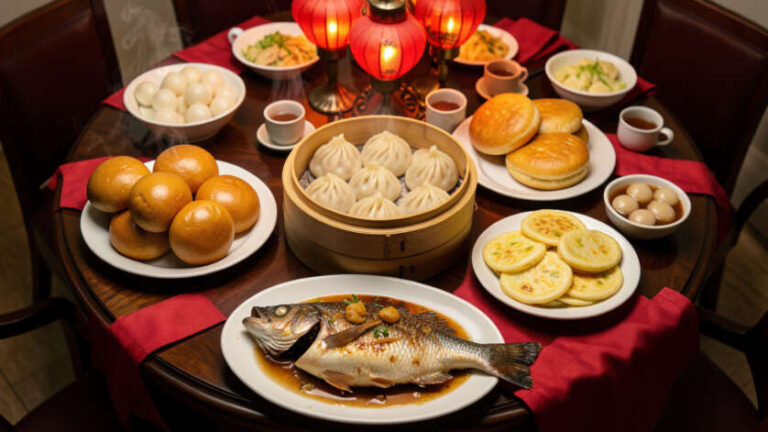
During the annual Chinese New Year feast, serving a whole fish is a mandatory tradition. The phrase often spoken is “年年有余” (nián nián yǒu yú), which translates to “may you have abundance every year.” The visual of the fish on the table becomes a physical manifestation of this blessing.
- Linguistic Homophone: The identical pronunciation of “fish” (鱼) and “surplus” (余) is the single most important factor.
- Cultural Reinforcement: This pun is embedded in countless proverbs, New Year greetings, and blessing phrases.
- Visual Association: The live, swimming nature of fish in ponds or aquariums also visually represents “flowing” wealth and life.
- Historical Context: This symbolism has been documented for centuries, solidifying its place in cultural practices.
- Cross-Dialect Consistency: While pronunciations can vary, the core symbolic link remains strong across most Chinese dialect groups.
Tip: When learning about Chinese symbols, always pay attention to pronunciation. The auditory connection (homophones) is often more important than the visual shape for many lucky charms.
How Does the Chinese New Year Fish Tradition Work?
The most visible and important ritual involving fish symbolism occurs during the Spring Festival, or Chinese New Year. The New Year’s Eve reunion dinner is the centerpiece of the holiday, and a whole fish dish is the non-negotiable star of the meal. Every detail of this tradition carries meaning.
The fish must be served whole, with the head and tail intact. This symbolizes a good beginning and end to the year, representing completeness and unity. Often, the head of the fish is pointed towards the guest of honor or the eldest family member as a sign of respect.
| New Year Fish Tradition Element | Symbolic Meaning |
|---|---|
| Whole Fish (Head & Tail) | Completeness, unity, and a good start and finish to the year. |
| Not Finishing the Entire Fish | Leaving some “余” (surplus) for the new year, ensuring continued abundance. |
| Specific Fish Type (e.g., Carp) | Carp (“鲤鱼” lǐyú) sounds like “profitable year” (利余). |
| Fish Decorations & Paintings | Placed on walls to attract the blessing of surplus into the home. |
The “leftover” fish is intentionally not eaten in one sitting. It is deliberately saved, symbolizing that the surplus (“余”) will carry over into the next year. This practice reinforces the wish that abundance is not a one-time event but a continuous flow.
What Do Specific Types of Fish Symbolize?
While any fish carries the general meaning of abundance, certain species hold special significance due to their own linguistic properties and historical tales. The choice of fish for an occasion or decoration is often deliberate, layering additional messages of luck and success onto the core symbolism of surplus.
The most revered is the carp, particularly the “dragon carp” or “koi carp.” In legend, a carp that successfully swims upstream and leaps over the “Dragon Gate” waterfall on the Yellow River will transform into a powerful dragon. This makes the carp a profound symbol of perseverance, success, and high achievement, especially in scholarly or professional endeavors.
- Carp (鲤鱼, lǐyú): Symbolizes success, academic achievement, and professional promotion. The name sounds like “profitable year.”
- Goldfish (金鱼, jīnyú): “Gold” combined with “fish” makes it a direct symbol for wealth and financial fortune. Keeping goldfish in glass bowls is common in homes and businesses.
- Eight Goldfish: The number eight (八, bā) is the luckiest number in Chinese culture, sounding like “发” (fā) for prosperity. Eight goldfish represent a powerful combination for generating wealth.
- Black Goldfish: Sometimes kept in pairs, they are believed to absorb or deflect negative energy (煞气, shāqì), protecting the household’s wealth.
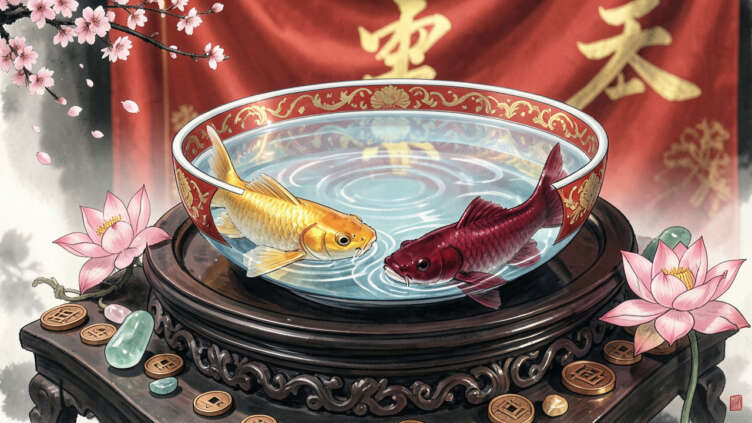
- Two Koi Carp: Often depicted swimming together, they represent marital bliss and harmony, with the Chinese for “two fish” (双鱼, shuāngyú) sounding like “smooth” (顺, shùn).
Warning: Be mindful with the number of fish in a tank or display. While eight is auspicious, four (四, sì) is famously unlucky as it sounds like “death” (死, sǐ). Odd numbers can also be avoided by some for home displays, as even numbers are preferred for harmony.
How Is Fish Symbolism Used in Home and Office Decor?
Beyond the dinner table, the symbol of fish is actively incorporated into living and working spaces to invite and trap positive energy, or “qi.” Feng Shui, the ancient Chinese practice of harmonizing individuals with their surrounding environment, extensively uses fish imagery and live aquariums to enhance financial luck.
Placing a fish tank or artwork in specific sectors of a home or office is a common practice. The southwest corner is associated with love and marriage, while the southeast corner is the universal “wealth corner” according to traditional Feng Shui Bagua maps. A well-maintained aquarium in the southeast is thought to activate wealth energy.
Common Fish Decor Items and Their Placement
Fish decor is ubiquitous, from paintings and sculptures to fabric patterns and jewelry. Each placement has a specific intention.
- Feng Shui Aquarium Placement: Position in the southeast (wealth) or east (health) of a living room or office. The flowing water circulates and multiplies prosperity.
- Koi Pond in Garden: A classic feature in traditional Chinese gardens, it symbolizes a constant flow of abundance for the entire household.
- Fish Paintings or Calligraphy: Hung on walls, especially in the dining room or main living area, to bless the home with surplus.
- Clothing and Textile Patterns: Fish motifs on cheongsams (qipaos), silk scarves, or bedding wish the wearer or owner continuous fortune.
- Office Gifts: A desktop fountain with a fish or a plaque with fish art is a common gift to a business, wishing them “年年有余” (annual abundance).
The presence of live fish requires diligent care. In Feng Shui, a fish tank with sick or dead fish is considered very inauspicious, symbolizing depleted luck. Regular cleaning, healthy fish, and clean water are essential to maintain the positive energy flow.
What Role Does Fish Play in Chinese Art and Mythology?
The symbolic fish has swum through the currents of Chinese art and mythology for millennia, evolving from a simple food source to a complex emblem of cosmic and social ideals. In ancient pottery, bronze work, and jade carvings, fish motifs represented fertility and abundance.
Mythology further cemented the fish’s status. Beyond the dragon-carp legend, the carp is one of the eight auspicious symbols of Buddhism in Chinese tradition, representing courage and transformation. Folklore is filled with stories of magical fish that grant wishes or transform into beautiful maidens.
| Artistic Medium | Common Fish Symbolism Displayed |
|---|---|
| Porcelain & Ceramics | Fish bowls, plates, and vases often feature fish for household blessing and decorative abundance. |
| Embroidery & Textiles | Wedding dresses and linens use paired fish to bless a marriage with harmony and surplus. |
| Ink Wash Painting | Koi and goldfish are classic subjects, representing freedom, success, and the joy of an abundant life. |
| Stone & Jade Carving | Fish pendants and sculptures are worn or displayed as talismans for wealth and good fortune. |
A famous artistic and linguistic pun is found in the motif of a lotus (“莲”, lián) and a fish (“鱼”, yú). Together, they sound like “连年有余” (lián nián yǒu yú), meaning “abundance year after year.” This pairing is extremely popular in New Year prints and decorations.
Important: When you see a fish combined with other elements in Chinese art, consider the sound of all the objects together. The cumulative meaning often creates a more specific and powerful blessing.
Why Is Serving Whole Fish a Sacred Ritual?
The act of preparing and serving a whole fish at banquets, especially during Chinese New Year and birthdays, is a ritual steeped in respect and intentionality. It is not merely about taste; it is a performance of cultural values and hopes for the future.
The wholeness of the fish is paramount. Removing the head or tail before serving would symbolically “cut off” the beginning or end of fortune. The diner who eats the fish is participating in a communal wish for prosperity.
It is a focal point of the meal, often accompanied by specific toasts and blessings.
- Symbol of Completeness: Represents a full cycle, from start to finish, for the coming year.
- Centerpiece of Blessing: The fish is the physical embodiment of the “年年有余” wish on the table.
- Acts of Sharing and Leaving Surplus: The practice of not finishing it reinforces the community and forward-looking nature of the celebration.
- Honor and Respect: Serving the best fish, often the most expensive part of the meal, shows honor to guests and family.
- Intergenerational Transmission: The ritual teaches younger generations about cultural values, hope, and the importance of tradition.
The selection of the fish is also a ritual. Families will often choose a live fish from a market or restaurant tank, ensuring its freshness and vitality, which metaphorically translates to the strength of the family’s luck.
How Does Modern Chinese Culture View These Fish Symbols?
In contemporary China, the symbolism of the fish has not faded with modernization; instead, it has adapted. While traditional rituals are still widely observed, the symbol has been commercialized and integrated into modern life, graphic design, and pop culture. It remains a potent and recognizable emblem of good fortune.
During New Year, the tradition of giving mandarin oranges in a bag is sometimes augmented with small, decorative fish. Online red envelopes (hóngbāo) may feature animated fish swimming across the screen. Corporate branding, especially for financial and food services, frequently incorporates fish logos to subconsciously convey prosperity and freshness.
The practice of keeping aquariums remains popular in homes and offices, with modern filtration systems making it easier than ever. The underlying belief in the Feng Shui properties of flowing water and living fish persists strongly among many urban professionals and business owners seeking a harmonious and prosperous environment.
Even in diaspora communities worldwide, serving a whole fish during Lunar New Year is a cherished tradition that connects second and third generations to their heritage. The symbol transcends geography, acting as a cultural anchor that continues to communicate shared values of family, hope, and the universal desire for a life of abundance.
Frequently Asked Questions
Why is the fish specifically linked to New Year?
The link is primarily due to the pun “年年有余” (nián nián yǒu yú), meaning “may you have surplus every year.” Serving a fish at the New Year’s reunion dinner is the most direct way to physically manifest and internalize this central blessing as the family enters the new year.
Are all fish symbols considered lucky?
While most fish represent abundance, certain ones like carp and goldfish are especially potent due to additional linguistic and mythological meanings. The number and color of fish in decorative contexts matter greatly, as some combinations (like four fish) are considered unlucky due to numerical symbolism.
What is the best location for a fish tank in a home?
According to Feng Shui principles, the southeast corner of a living room or office is the ideal “wealth corner” for activating financial luck. The east sector is also beneficial for health and family harmony. The tank should be clean, the water flowing, and the fish healthy to maintain positive energy.
Does the direction the fish faces in art matter?
Yes, in some contexts. A fish swimming into the house (in a painting or decor) is thought to bring fortune and luck inside. A fish swimming outwards might be seen as letting luck escape.
During New Year, the head of the cooked fish is often pointed towards a respected guest or elder as a sign of honor.
Can the fish symbol be used for personal jewelry?
Absolutely. Fish pendants or earrings made from jade, gold, or precious stones are popular talismans worn to attract personal wealth and prosperity. The material of the jewelry (e.g., gold for wealth, jade for protection and harmony) adds another layer of meaning to the symbolic fish.
Final Thoughts
The fish as a symbol of abundance in Chinese culture is a perfect example of how language, history, and daily practice intertwine to form a powerful cultural code. From the simple homophone “yú” to elaborate New Year rituals and Feng Shui applications, it represents a profound and practical hope for a prosperous, surplus-filled life.
Whether observed in a traditional painting, a New Year feast, or a modern office aquarium, the meaning remains resonant. It teaches the enduring human desire for security, continuity, and the joy of having “more than enough.”