How to Feng Shui a Garden for Balance
To Feng Shui a garden for balance, you arrange plants, pathways, and objects according to the Bagua map and the five elements to optimize Chi flow. Curved pathways slow energy to prevent stagnation, while balancing Wood, Fire, Earth, Metal, and Water supports specific life areas like wealth or relationships. Regular maintenance and intentional plant choices, such as bamboo for growth or lavender for calm, are essential for sustaining harmony.
A Feng Shui garden uses ancient Chinese principles to arrange plants, paths, and objects for positive energy flow. This guide explains how to map your space, balance the five elements, and avoid common mistakes.
Simply put, a Feng Shui garden arranges outdoor elements to optimize the flow of Chi, or life force energy. The goal is to balance Wood, Fire, Earth, Metal, and Water within your specific landscape. This harmony supports health, wealth, and overall well-being.
Key Takeaways
- The Bagua map divides your garden into nine sectors, each linked to a specific life area like wealth or relationships.
- Balancing the five elements (Wood, Fire, Earth, Metal, Water) is essential for creating smooth and supportive Chi flow.
- Curved pathways are a fundamental design element because they slow down energy and prevent stagnation.
- Specific plants like bamboo and lavender support distinct energy intentions and element needs within the garden.
- Regular garden maintenance is a core Feng Shui practice to prevent dead or stagnant energy from accumulating.
What You Need to Start a Feng Shui Garden
You do not need expensive tools to start. You need a basic understanding of the Bagua map and the five elements. A simple compass and a sketch of your garden work well.
- Bagua Map – An energy map that divides your garden into nine sectors, each tied to a life aspect like family or career.
- Compass – Used to determine the correct orientation of your garden and home entrance. A phone compass app is sufficient.
- Five Elements – Wood, Fire, Earth, Metal, and Water. You need physical representations of each element in your garden.
- Basic Garden Tools – Shovel, pruners, and gloves for planting and shaping the landscape.
- Plants and Hardscape Materials – Stones, gravel, a water feature, and specific plants like evergreens or flowering shrubs.
Important: The Bagua map is the primary tool for Feng Shui layout. Align the base of the map with the main entrance of your garden or home for accurate placement.
How to Feng Shui Your Garden for Balance Step by Step
Follow these specific steps to transform your outdoor space into a balanced sanctuary. Each step builds on the last to create a cohesive energy map.
- Clear and Clean the Space – Remove all dead plants, clutter, and debris. Stagnant energy, or Si Chi, accumulates in disorder. According to the American Horticultural Therapy Association, a clean garden space directly improves mental clarity and reduces stress.
- Map Your Bagua – Stand at your garden entrance facing inward. Layer the Bagua map over your garden layout. The entrance is traditionally the Career area.
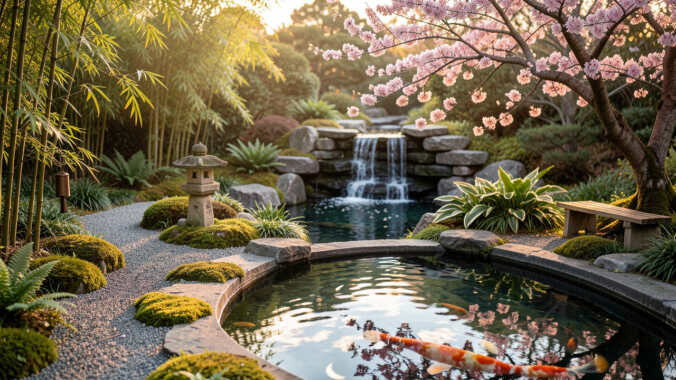
- Shape the Pathways – Design meandering, curved paths using gravel, stone, or brick. Curves slow down Chi and make the garden feel larger and more inviting.
- Introduce the Five Elements – Place Wood (plants), Fire (lighting, red colors), Earth (rocks, terracotta), Metal (wind chimes, sculptures), and Water (fountains, birdbaths) in their respective Bagua sectors.
- Add Plants with Intention – Use plants that represent specific elements. Upright bamboo brings Wood energy. Spiky plants like agave offer Fire protection. Soft lavender grounds the Earth element.
Tip: A small wind chime placed in the Metal sector (West or Northwest) activates clarity and helps complete projects. The sound itself generates beneficial Chi.
What to Expect After Balancing Your Garden
A balanced garden feels calm and alive. You might notice more birds and butterflies, which are signs of healthy Chi. The University of Exeter Medical School found that people who spend at least 120 minutes in nature per week report significantly better health.
Environmental psychology research indicates that curved landscapes and natural water features lower cortisol levels. This aligns directly with the Feng Shui goal of reducing negative energy and promoting relaxation. The cost varies based on your choices, but basic changes like adding a birdbath or pruning overgrown shrubs are low-cost.
| Element | Action | Expected Outcome |
|---|---|---|
| Water | Install a fountain or birdbath | Attracts wealth, creates soothing sound |
| Earth | Add large rocks or a stone bench | Stability and grounding for the family |
| Wood | Plant bamboo or a new tree | Growth, vitality, family harmony |
| Fire | Add solar lights or red flowers | Passion, recognition, high energy |
| Metal | Hang a wind chime or metal sphere | Clarity, precision, project completion |
Common Feng Shui Garden Myths and Mistakes
Many people make errors that block the intended flow of Chi. Avoid these specific traps to keep your garden balanced and effective.
- Myth: Feng Shui is only about furniture placement. Feng Shui is a complete system of spatial geometry and energy flow. It applies directly to landscapes and gardens through the Bagua map and element theory.
- Mistake: Using straight lines and sharp corners. Straight paths are called secret arrows in Feng Shui. They send aggressive energy straight at the house. Always use gentle curves in your walkways and borders.
- Mistake: Ignoring the back garden. The back garden represents your future and your career in some Feng Shui schools. Neglecting it creates blocked opportunities. Give the back garden as much attention as the front.
- Mistake: Overloading one element in one area. Too many rocks (Earth) in the Wood sector can suppress growth. Keep a balanced proportion. Place elements in their natural creative cycle order.
- Myth: Water features are always beneficial. Stagnant water in a birdbath or pond creates negative Chi. Moving water is essential. Clean your fountain weekly and ensure the water circulates properly.
Warning: Do not place the water feature directly in line with the main door. This placement can push wealth energy away instead of drawing it into the home.
Pro Tips for a Balanced Feng Shui Garden
These expert strategies help you refine the energy of your outdoor space and activate specific life areas.
- Use a wind chime in the Metal bagua sector to activate clarity and fame energy. The sound itself generates Chi.
- Plant lavender or rosemary near seating areas. Their scents ground the Earth element and promote relaxation.
- Fix leaky faucets immediately. In Feng Shui, a leak represents money draining away. A thorough check of your irrigation system supports wealth.
- Add lighting to the North sector to activate the Water element and career opportunities. Solar path lights are an easy way to do this.
- Plant bamboo in the East sector to strengthen family and health energy. Choose clumping bamboo to prevent invasive spreading.
Frequently Asked Questions About Feng Shui Gardens
What is the best plant for a Feng Shui garden?
Bamboo is the most recommended plant because it represents the Wood element and creates a natural privacy screen. It is resilient and grows quickly. Peonies are also highly regarded for attracting romance and wealth.
How does a water feature work in garden Feng Shui?
Moving water carries Chi and activates the Wealth area (Southeast). A fountain with a gentle, bubbling sound is ideal. Stagnant water in a birdbath should be changed weekly to maintain positive energy.
Do I need a compass to Feng Shui my garden?
A compass helps establish accurate Bagua directions, but it is not strictly required. You can also align the map based on the main entrance of your garden or home. Consistency matters more than absolute precision.
Where should I place rocks in my garden?
Place rocks in the center of the garden to represent the Earth element and provide stability. Avoid placing large rocks directly in the path of the main walkway. They should anchor the space, not block it.
How often should I change my garden Feng Shui?
Review your garden layout at the start of each season. Remove dead leaves and update plants. This keeps the energy cycle fresh and responsive to your current life goals.
Final Thoughts
A balanced Feng Shui garden brings harmony directly into your daily environment. Focus on curved pathways, the five key elements, and regular maintenance. Your outdoor space will become a true sanctuary for positive energy and well-being.